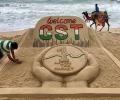
GST collections in June witnessed a 56 per cent year-on-year increase to over Rs 1.44 lakh crore on economic recovery and better anti-evasion measures, the finance ministry said on Friday. Goods and Services Tax (GST) collections in June, 2021 stood at Rs 92,800 crore. Speaking at the GST Day celebrations, Finance Minister Nirmala Sitharaman said Rs 1.4 lakh crore is the "rough bottom line" for monthly GST revenue collections.

States also demanded that Budget for 2015-16 should make adequate provisions for central sales tax compensation for early roll out of Goods and Services Tax, a Constitutional Amendment Bill for which was tabled in the Lok Sabha last week.

Inching towards rolling out of GST, the GST Council on Saturday approved a law to compensate states for any loss of revenue from the implementation of the new national sales tax but deferred approval for enabling laws to next meeting.

The vice president met Leader of the party in Lok Sabha Mallikarjun Kharge, P Chidambaram and Deputy Leader of the party in Rajya Sabha Anand Sharma, among others and discussed various points regarding the key tax reform legislation.
On the macroeconomic data front, PMI data on manufacturing and services sector will also influence trading

Gandhi added that the nation's power has always come from the strength of ideas.
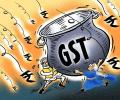
GST collection grew by 12 per cent in April to Rs 1.87 lakh crore, the highest monthly mop-up since the rollout of the indirect tax regime. The gross GST revenue collected in the month of April 2023 is Rs 1,87,035 crore of which CGST is Rs 38,440 crore, SGST is Rs 47,412 crore, IGST is Rs 89,158 crore (including Rs 34,972 crore collected on import of goods) and cess is Rs 12,025 crore, the finance ministry said in a statement. The previous high collection of Rs 1.68 lakh crore was in April last year.
The monsoon session of Parliament is likely to begin in the third week of July and end by mid August.

The one national GST unifies the country's $2 trillion economy and 1.3 billion people into a common market, an exercise that took 17 tumultuous years.
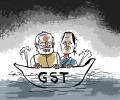
Agra has long been known for the Taj Mahal, but it is also a manufacturing hub filled with micro, small and medium enterprises (MSMEs) that make everything from electronic components to metal products, from paints and chemicals to footwear. And five years after the introduction of the Goods and Services Tax (GST), the MSMEs here complain that while the indirect tax regime has been transformative, cutting out the need to file multiple taxes, its biggest drawback has been the delay in credit refunds. Whoever you speak to - MSME owners, tax lawyers, or industry bodies like the National Chambers of Industries and Commerce (NCIC), Agra Footwear Manufacturers and Exporters Chamber (AFMEC) and Agra Shoe Manufacturers Association (ASMA) - they all emphasise that the GST continues to face some key challenges.
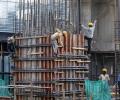
Electricity has also been kept out of the GST ambit.

R Vignesh is a member of the Institute of Cost and Management Accountants of India in Chennai, appeared on Rediff Chat to answer readers' queries on GST.

'GST will bring in much needed transparency and higher investments in the coming years and we hope that a few percentage points to India's GDP.'

The revamped Special Economic Zone (SEZ) law is unlikely to see the light of the day before the upcoming Lok Sabha elections, two people aware of the matter said. The commerce department had sought the Union Cabinet's nod to bring amendments to the existing SEZ Act, 2005 late last year. The plan, thereafter, was to introduce the Bill in the winter session of Parliament. Cabinet's approval remains pending.

While the government has the option of ensuring the passage of these Bills as money Bills, there are voices within the government advising discretion on the GST roll-out by April 1.

'In terms of incentives, if you think about it, hybrids are a 20-year-old technology.'

FM said a Constitution Amendment Bill for introduction of GST will be passed soon.

Lok Sabha passed the Finance Bill, after approving more than two dozen official amendments, by voice vote, thus completing the Budgetary exercise for 2019-20 in the Lower House.

The prime minister, who spoke in the Upper House as it bid farewell to 53 retiring MPs, noted that Rajya Sabha members are representatives of the states and the interest of their state should be a priority for them.
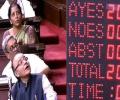
Enthused by the consensus in reaching four-tiered GST tax structure, particularly the unanimity achieved with Congress-ruled states, senior government sources were confident that the Central GST and Integrated GST Bills will be passed by both the Houses.

"Reaching an international agreement on how large digital companies are taxed has been a priority for the chancellor since he took office," said a spokesperson for his UK treasury office. "The chancellor's consistent position has been that it matters where tax is paid, and any agreement must ensure digital businesses pay tax in the UK that reflects their economic activities. That is what our taxpayers would expect and is the right thing," the spokesperson said.

Speaking at the all-party meeting called by the government, Modi said, "People have great expectations and that is why Parliament should function and be productive."
The commerce ministry is proposing a host of direct and indirect incentives such as deferral of import duties and exemption from export taxes to revamp Special Economic Zones through a new legislation, an official said. In the Union Budget this year, the government proposed to replace the existing law governing Special Economic Zones (SEZs) with a new legislation to enable states to become partners in 'Development of Enterprise and Service Hubs' (DESH). The official said the commerce ministry has sought views of different ministries, including finance, on the new bill.

After securing Congress support for a rise in the foreign investment cap in the insurance Bill, this is another key reform Bill where the Centre has managed a broad consensus.

The government will find it difficult to pass the Bill without the Congress's help
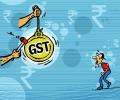
'We crossed Rs 1.7 trillion in three months this financial year.'
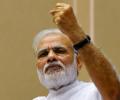
Prime Minister Narendra Modi on Thursday asked his Council of Ministers to make extra efforts for effective implementation of public welfare schemes at the ground level and work on new ideas in their ministries ahead of the budget.

PM Modi said his government has nothing to hide and would take everybody into confidence while dealing with it.
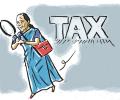
'Appellants may not lap up the scheme because, first, to do so would amount to admission of guilt, and second, they may have smelled victory before higher appellate forums,' notes S Murlidharan.
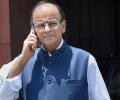
Manufacturing taxes, VAT will come down, assures Jaitley

Bank, bankruptcy reforms, Nabard Bill amendment on agenda.

FM proposed rationalisation of various tax exemptions.

The Asian markets are largely trading in the green, taking heart from a positive close on Wall Street.

Morgan Stanley expects the central bank to cut rates this week, 125 bps in cuts through 2015.
Singling out the Congress as the only opponent to the GST, the government hopes to pass the bill after the altered numbers in the Upper House, reports Archis Mohan.

Addressing public rallies at Barnala chowk and Bhawanigarh in Sangrur, the chief minister vowed to do whatever it takes to protect the farmers and the state from the 'devastating' effects of the 'black laws'.

With just eight days left for the winter session, Jaitley and Parliamentary Affairs Minster M Venkaiah Naidu held consultations with Leader of Opposition in Rajya Sabha Ghulam Nabi Azad and Deputy Leader Anand Sharma.

What Rajya Sabha can do for the states, no other House can do, the Prime Minister said.
References to the repealed laws for service tax, purchase tax, etc, continue in the SEZ laws.

The GST to be implemented from April 1, 2016, will increase the premiums.
